Dignity at 30,000 Feet: A Wheelchair User's Practical Guide to India in 2026
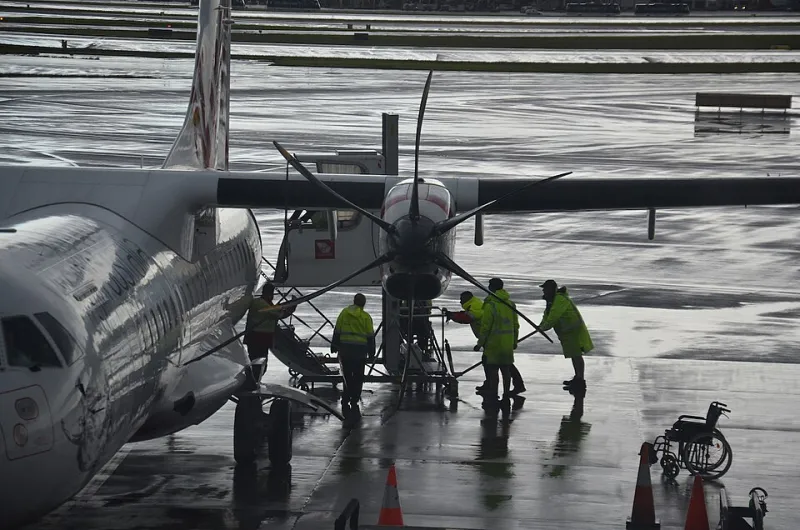
Photo: JarrahTree, CC BY 2.5 au, via Wikimedia Commons
India has a reputation among British travellers with mobility needs: brilliant for the soul, brutal for the knees. Some of that is earned. A fair chunk of it, in 2026, is simply out of date — or at least out of date in the places you're most likely to go.
This isn't a cheerleading piece. There are gaps, and pretending otherwise helps nobody. But if you use a wheelchair, or you're flying out with a parent who does, the trip is more manageable than the group chat will have you believe. Here's the honest version.
Sort the UK end first — it's the easy bit
UK airports have had years of practice at this, and the assistance process is broadly the same whether you're leaving from Heathrow T5, Manchester T2 or Glasgow. Book special assistance through your airline at the time of booking, then again about a week out — not because the system forgets, but because third-party ground handlers sometimes do.
Two things worth knowing. First, the assistance you book applies at every airport on the ticket, including the Indian end, but only if it's on the booking. A verbal promise at the check-in desk is not a booking. Second, if you're travelling with a partner or family member, ask for them to be allowed to push you. Some handlers will insist on their own staff; most will let a companion take the handles if you ask politely and it's clear you'd prefer it.
If you have a hidden disability or fatigue issues rather than a visible mobility aid, a Sunflower lanyard is still worth wearing. It's a UK scheme, so don't expect it to be universally understood in Delhi — but staff at the bigger Indian terminals have seen them, and it costs nothing.
Batteries, gate-checks and the handover
Power chairs are where trips quietly fall apart. Lithium-ion batteries must travel in the cabin, must be protected against short circuit, and if you're carrying a large pack you'll need the airline's medical desk to sign it off in advance — the call centre will not know the rules, so email and keep the reply.
Dry-cell and gel batteries can usually travel checked, sometimes with the terminals disconnected. Ask for your chair to be delivered to the aircraft door on arrival rather than to the baggage belt. At most Indian airports this works smoothly; at a few, the chair appears 40 minutes after you do. Build that into your connection time rather than fuming about it.
One genuinely useful 2026 note: on widebody long-haul aircraft, an onboard aisle chair for the lavatory is increasingly standard on the Gulf carriers and on Air India's newer long-haul fleet. On domestic narrowbodies it is not. If you're doing Delhi to Kochi, plan for a four-hour flight with no accessible loo and adjust your fluids accordingly.
Landing in India: better than you'd guess
Delhi's Terminal 3, Mumbai's T2, Bengaluru's T2 and Hyderabad all have lifts, ramps, accessible toilets and staffed assistance. The catch isn't infrastructure, it's coordination — so book wheelchair assistance twice, once with the airline and once through the airport's own meet-and-greet service if it has one.
Immigration has an assistance lane at most major terminals. You won't always be waved through, but ask. And if DigiYatra biometric gates are the default at your terminal, tell a marshal early — there's always a manual lane, it's just not signposted.
Baggage is where you'll want a porter. They're official, they're paid, and in a crowded arrivals hall with a chair and three suitcases they are worth every rupee.
Cabs, vans and the truth about pavements
The honest answer on pavements: assume they're a suggestion. Kerbs appear and vanish, paving slabs lift, and a wheelchair user alone on a Bengaluru footpath is having a different day to a wheelchair user in Bristol.
That said, getting around by vehicle is straightforward. Ride-hailing apps operate widely, but accessible vehicles are patchy and the 'assist' options don't exist everywhere you'd hope. The reliable route is a hotel-arranged car, or one of the specialist operators in Delhi, Mumbai, Bengaluru and Goa who run adapted vans with ramps — book these weeks ahead, and expect to pay noticeably more than an Uber.
Some travellers carry a lightweight folding ramp, roughly the size of a laptop bag. It's the single most useful bit of kit you can pack.
Hotels: ask for photographs, not adjectives
'Accessible' in India can mean a roll-in shower and grab rails, or it can mean a ground-floor room with a slightly wider door. The big chains — Taj, Oberoi, ITC, Marriott — are generally dependable and will send you measurements if you email. Heritage properties and homestays are lovely and wildly variable: ask for photos of the bathroom door, the shower threshold and the entrance step before you pay.
Temples, stations and queues
Temple visits are the part people worry about most, usually unnecessarily. Many major temples run a separate assistance line, and the Golden Temple in Amritsar is largely flat with ramps and is genuinely easy. Siddhivinayak in Mumbai and Tirumala both have assistance arrangements — ask at the office rather than joining the main queue and hoping.
What you can't dodge is footwear. Socks help. So does a companion willing to hold the shoes.
Indian Railways has improved more than its reputation suggests. Wheelchair booking, station assistance and the porter-plus-wheelchair service are all available at major stations, and there's a concession category for travellers with disabilities. But the platform gap is real, ramps aren't universal, and a 14-hour overnight is a different proposition to a 90-minute flight. For most UK visitors, rail is a lovely idea best saved for the shorter, gentler legs.
The small things that save a trip
Take your own cushion. Pack spare parts and a repair kit. Check your travel insurance explicitly covers mobility equipment, because many policies quietly don't. Carry prescriptions in original packaging, plus a letter from your GP.
And give yourself permission to do less. The travellers who enjoy India most aren't the ones who saw everything — they're the ones who booked the slower train, the closer hotel and the extra day.