The British Guest’s Wedding Playbook: Saris, Shagun and Surviving the Sangeet
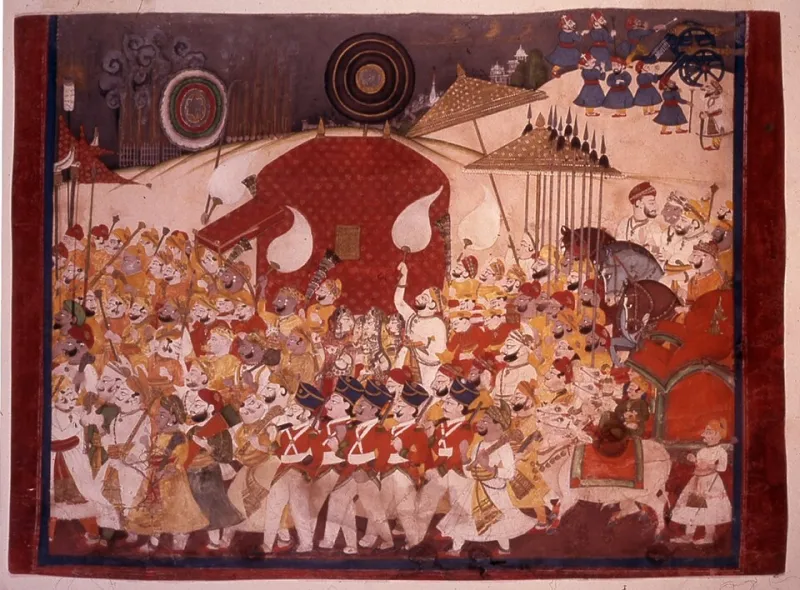
Photo: Unknown, Public domain, via Wikimedia Commons
So you’ve said yes to an Indian wedding. Excellent decision. You may also have realised that “wedding” can mean a mehndi, a haldi, a sangeet, a ceremony, a reception and at least one chai-fuelled after-party — sometimes in different outfits, often in different cities. As a British guest, the trick is to be warm, curious and prepared without turning up with a suitcase the size of a small car.
First, work out what you’ve actually been invited to
Indian weddings are not a single template. A family wedding in Punjab may look very different from a Tamil ceremony in Chennai or a Bengali wedding in Kolkata. Ask your host — or the friend who invited you — for a simple rundown: which events matter most, what the dress code is, whether there are religious ceremonies where shoes and head coverings matter, and whether alcohol is served. This is not being nosy. It is being a good guest.
If you are a plus-one and don’t know the family well, ask your partner or friend to be your translator of etiquette. A quick WhatsApp message to a cousin is worth more than an hour of internet guessing.
What to wear without buying three new lives
You do not need a different outfit for every event. You need one great wedding outfit, one relaxed daytime outfit and one pair of shoes you can actually stand in. British guests often overpack because they imagine each ceremony demands a new look. It doesn’t.
For the main wedding, bright colours are usually welcome. Avoid all-black and all-white for the ceremony unless you know the family prefers it. A sari, lehenga, sherwani or a smart kurta set all work; so does a modest dress or suit if that feels more like you. If you’re buying in the UK, expect to pay roughly £120–£300 for a good outfit, plus alterations. If you buy in India, £60–£150 can go a long way, but leave time for tailoring — a day or two is not always enough in wedding season.
Bring a light shawl or dupatta. It helps in air-conditioned halls, covers shoulders at a temple or gurdwara, and doubles as a blanket on a chilly coach. Comfortable flats or block heels are your friends. Wedding venues are full of gravel, stairs and long walks from the car park.
The budget: outfits, gifts and cash envelopes
A sensible 2026 budget for a British guest might look like this: £100–£250 for clothing if you’re buying at home, £30–£100 for a gift or cash envelope depending on closeness, and £20–£50 for local transport and incidentals. If you’re buying an outfit in India, keep £40–£80 aside for alterations, shoes and jewellery that you will probably convince yourself you need.
Cash envelopes — often called shagun — are common. Many families use auspicious odd-numbered amounts ending in 1, such as ₹1,001, ₹2,001 or ₹5,001, but this varies by region, community and relationship. Ask your host or a trusted relative what is appropriate. It is not rude to check; turning up with a random even number or a very large amount can be more awkward than asking.
If you’re flying, leave heavy gifts at home. A small UK-made item, a nice card, or cash is kinder to your luggage and easier for the family to manage. Avoid fragile ornaments and anything that needs a plug adapter to be understood.
Ceremony etiquette: shoes, hands and photographs
At many religious ceremonies you will remove your shoes. Wear socks you don’t mind being seen, or keep a pair of travel slippers in your bag. At a gurdwara, cover your head; a scarf is fine. At a temple, dress modestly and follow the family’s lead. Use your right hand for giving and receiving, and don’t be surprised if someone insists on feeding you within thirty seconds of arrival. Say yes to chai. Ask about spice levels if you need to.
Photographs need consent. The couple may have a photographer, but that doesn’t mean every guest wants to be in the background of a video call to an aunt in Leicester. Ask before filming ceremonies, and never block the aisle during the actual wedding. If in doubt, put the phone down and watch. You’ll remember more.
Build the trip around the wedding, not the other way round
If you’re flying from the UK, don’t schedule a 6am internal flight the morning after a reception that ends at 2am. Give yourself a recovery day. Pick one wedding city and one nearby add-on — a fort, a beach, a food walk, a few quiet days in the hills — rather than trying to “do India” in a week.
For smaller cities, fly to the nearest hub and use a driver for the final stretch. Book trains early if you’re using them, and keep your luggage light enough to lift into a car boot without a committee meeting. Leave space in your suitcase for an outfit you buy there. You will buy an outfit there.
Most importantly, accept that you cannot attend everything. Choose the events that matter most to your friend or family, be honest about your energy, and enjoy the bits in between. The best wedding guests are not the ones with the most outfits. They are the ones who help carry chairs, learn a few dance steps, and know when to sit quietly with an elderly relative who wants to tell a story.