Rail Rulebook: How to Book Indian Trains from the UK in 2026 Without a Family Favour
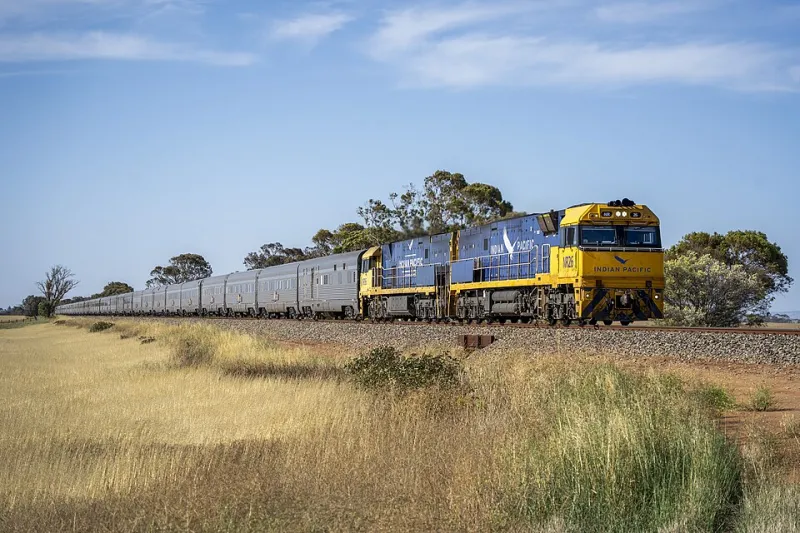
Photo: Tomoyn, CC BY 4.0, via Wikimedia Commons
India by rail is still the most sociable way to cross the country. You share chai with a family heading to a wedding, watch the plains turn into palms, and arrive somewhere new without the airport shuffle. The admin is the unromantic bit. Do it before you fly and you won't spend your first morning in Delhi hunched over a phone, cursing your bank.
First, make peace with IRCTC
IRCTC is the official booking arm of Indian Railways. Use irctc.co.in or the IRCTC Rail Connect app, and register before you leave the UK. Use your passport name exactly as it appears on the document. Your e-visa isn't a rail ticket, but keep the PDF handy: some verification flows and ticket checks ask for passport and visa details, and any mismatch causes unnecessary friction.
The sign-up process can still be grumpy about non-Indian mobile numbers. Try the app rather than refreshing the website fifty times, use email verification where it is offered, and if the OTP page simply refuses to play, contact IRCTC support before you fly. Do not wait until you are standing in a station queue with a rucksack and a dying phone.
The payment hurdle, and how to clear it
This is where most UK plans wobble. IRCTC's payment gateway can be fussy with British cards. Enable international transactions, have a Visa or Mastercard ready, and don't rely on Amex. If one card fails, try another browser, clear your cookies, or use a rupee-denominated travel card. IRCTC has authorised payment partners, and some travellers find success by switching from the app to the desktop site, or the other way round.
Avoid random third-party sites promising instant tickets at mysterious mark-ups. If you do use an authorised agent, know that you are paying for convenience. The whole point of this guide is that you probably don't need to.
Choose your class like someone who has slept on a train
Sleeper class is cheap, open to the platform breeze and brilliant for people-watching. It is also dusty, noisy and not where you book if you need eight hours of uninterrupted sleep. AC 3-tier is the sensible middle ground for most UK travellers: air-conditioned, curtained, sociable and reasonably priced. AC 2-tier gives you more space and a calmer carriage. First AC is a splurge, and worth it on a long overnight if your budget stretches.
For daytime trains, chair car is the sweet spot. AC Chair Car on a Shatabdi or Vande Bharat feels a bit like a budget airline seat with far better legroom and much better food smells. Executive Chair Car is the plusher version. If you are doing Mumbai to Goa overnight, look at 2A or 3A. If you are doing Delhi to Agra in the morning, chair car is perfectly civilised.
Tatkal: set two alarms, not five
Tatkal is the last-minute quota, and it has a rhythm. AC classes open at 10am IST, non-AC at 11am IST, one day before the journey. In December, when the UK is on GMT, that means 4:30am and 5:30am. Set alarms, save passenger details in advance, and have your payment method ready. Tatkal tickets cost more and refunds are limited, so use the quota when you genuinely need it rather than as a default.
The other useful phrase is 'current booking'. If you are flexible, seats sometimes open up after the chart is prepared. It is not a plan for a tight itinerary, but it is a decent fallback if you are already in India and plans have shifted.
Luggage: pack for the platform, not the palace
Free luggage allowances are class-dependent. Broadly, expect around 40kg in sleeper, 3-tier and chair car, 50kg in 2-tier, and 70kg in first AC, but check the current IRCTC rules before you pack the kitchen sink. On Vande Bharat and some newer trains, luggage space can be tighter than you expect, so a soft bag beats a hard-shell monster.
Use a small padlock or cable tie on your main bag. Keep your passport, cards and phone on you, especially at night. Don't leave bags unattended on platforms, and don't accept food or drinks from strangers unless they are sealed or you have bought them yourself. None of this is about paranoia; it is just the same city sense you would use at Euston or Piccadilly.
Station survival for first-timers
Arrive 45 to 60 minutes before departure. Indian stations are not stations in the quiet British sense; they are small cities with trains attached. Check your platform on the displays, the IRCTC app or by asking at the enquiry counter. Keep your PNR number screenshotted. If something goes wrong, RailMadad is the official complaints and assistance channel.
For food, use IRCTC e-catering if you want a meal delivered to your seat, or stock up on snacks and bottled water before boarding. Station chai is a ritual and usually fine, but use your judgement. For getting to and from stations, use prepaid taxi counters or recognised ride-hailing apps. Ignore the man who insists your hotel is closed and his brother has a better one.
When a domestic flight is the smarter call
If your itinerary is tight, fly. Mumbai to Delhi by train is a proper overnight adventure, but it eats a day and a night. If you have ten days in India and want to see three regions, a two-hour flight can be the difference between a holiday and a relay race. Domestic flights can also be cheaper than AC 2-tier on sale fares, especially when you factor in time.
Use rail when the journey is part of the point: Delhi to Agra, Mumbai to Goa if you have the hours, Kerala's backwater belt, Kolkata to Darjeeling if you are doing the toy train pilgrimage. Use flights for the long, dull hops. That is not a betrayal of the romance; it is good trip design.
A pre-flight checklist for rail-leaning Brits
Register with IRCTC before you fly. Save a scan of your passport and e-visa. Enable international card payments. Book popular routes 60 to 90 days ahead. Screenshot your PNR and download the Rail Connect app. Pack light, lock your bag, carry ID, and check the luggage allowance for your class. Then relax: the train will almost certainly be late, and you will almost certainly still love it.