The Card in the Wrong Passport: An OCI Reality Check for British-Indian Families in 2026
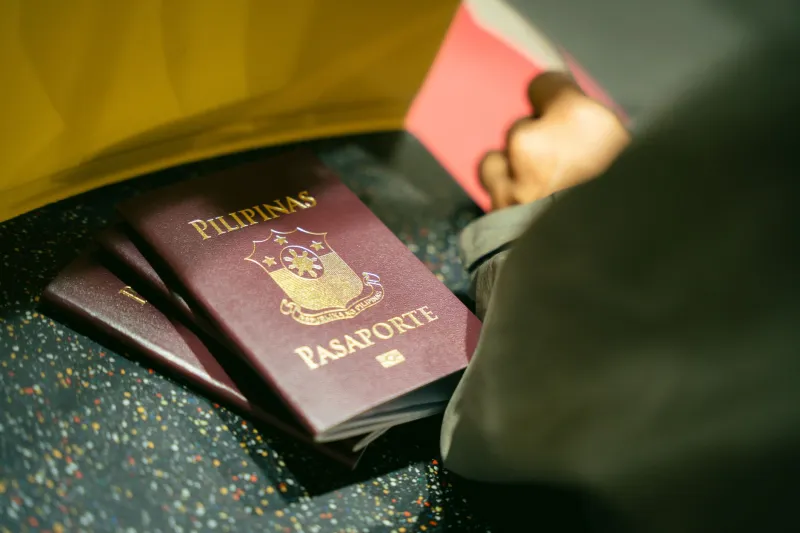
There's a particular sound at an Indian airport check-in desk: the soft, horrified shuffle of a family realising the OCI sticker is sitting in a passport that expired two years ago. The new passport is pristine and useless on its own. The old one is at home in a kitchen drawer in Leicester. And the flight leaves in ninety minutes.
This is not a rare story. It is practically a genre. So before you book anything for 2026, here's the plain-English version of how OCI actually behaves — what it does, what it doesn't do, and where British-Indian families habitually trip up.
First, the thing nobody believes: it isn't a passport and it isn't a visa
An OCI card is a registration certificate. It gives you lifelong permission to visit, live and work in India, but it does not replace your British passport and it does not function as a travel document on its own. You fly on your UK passport. You present your OCI alongside it. Remove one from the equation and the whole thing collapses.
That distinction matters more than it sounds, because it drives every other rule on this page. The card is a companion document, which is why the passport it's attached to is not a minor detail — it's half the paperwork.
The old-passport problem, explained properly
Historically, OCI was issued as a sticker placed inside your passport, plus a small booklet. When that passport expired and you got a new one, the sticker was stranded. For years the workaround was simply to carry both passports — old and new — and most families still do exactly that, out of habit and hard-earned caution.
If your card is a booklet rather than a sticker, you're in a better place, but you still need to keep the particulars current. The online OCI portal allows you to update passport details and a fresh photograph, and for most adults that update is free. It is a bureaucratic inconvenience rather than a crisis — but it must actually be done, not mentally noted and forgotten.
Our advice, bluntly: treat the old passport as part of the kit until your new card arrives. Rubber band them together. Put them in the same wallet. Do not let one travel to Goa and the other stay in Solihull.
Marriage, divorce, and the deed poll you didn't think about
Here's a scenario that catches out a surprising number of people. You married in 2019, changed your surname on your British passport, and your OCI still carries your maiden name. Immigration officials are not monsters about this, but mismatched names create delay, and delay at 3am after a long-haul flight is its own kind of misery.
A change of name — through marriage, divorce, or a UK deed poll — is grounds for a reissue rather than a simple update. In practice that means a fresh application, a fee, a new set of photographs, and supporting documents: marriage certificate, decree absolute, or deed poll, as applicable. If your name has changed by deed poll specifically, expect to be asked for the document in full, not a summary.
Do this well before you book flights. Not the week before.
Children's cards: the twenty-year rule and the every-passport habit
Children's OCI cards are the single biggest source of family stress, because children's passports expire every five years and the two clocks never quite line up.
The practical rule to hold onto: for minors, the OCI card does not need to be reissued every time a new passport is issued, but the passport details and photograph do need updating on the portal each time — and that practice continues until the child turns twenty. After twenty, and again after fifty, a formal reissue is required. Miss the twenty-year reissue and you may find yourself explaining the gap to an official who has heard it all before.
If your child's OCI was issued as a sticker in a now-expired passport, treat it as a reissue case rather than an update. Two children, two old passports, one folder — label it before you travel.
What UK processing actually looks like in 2026
Applications in Britain go through VFS Global centres (London, Birmingham, Manchester, Edinburgh and others), with the High Commission of India handling the decision. Realistic timings:
- Reissue or fresh OCI: commonly four to eight weeks, and noticeably longer in the February-to-May wedding-and-summer-holiday crush.
- Online particulars update: often days, but do not build an itinerary around it.
- Postal applications: add a week at each end for Royal Mail Special Delivery, and don't use anything unsigned-for.
There is no guaranteed expedited service, whatever a WhatsApp group may tell you. If your travel date is inside six weeks, you are cutting it fine.
The document bundle that actually gets you through
Carry, in one place: current British passport, OCI card or booklet, the old passport bearing the original sticker if you have one, and a printout of your e-ticket. For children travelling with one parent, add a letter of consent from the other — not an Indian requirement as such, but UK border staff and airlines increasingly ask.
Take photographs of every page on your phone. It won't get you through immigration, but it will rescue you at a VFS counter in a strange city.
When an e-visa is honestly the easier answer
Sometimes it just is. If your OCI reissue is in the post and the wedding is in three weeks, a fresh e-visa — typically processed in a handful of working days — can carry you through a single trip. It is not a substitute for the OCI and it doesn't reset anything, but as a bridge it works, provided you check current eligibility before applying. Don't assume OCI holders are automatically eligible; the rules have shifted more than once.
The pre-flight checklist
Six weeks out: confirm the name on every OCI matches every passport. Four weeks out: submit any reissue. One week out: check the portal status and ring VFS if it hasn't moved. Night before: passports, cards, old passports, printouts, consent letters — one bag, one place, nobody hunting through hand luggage at 4am.
Boring, yes. But boring is precisely what you want at an airport in India, when the only thing left to argue about is who's holding the snacks.